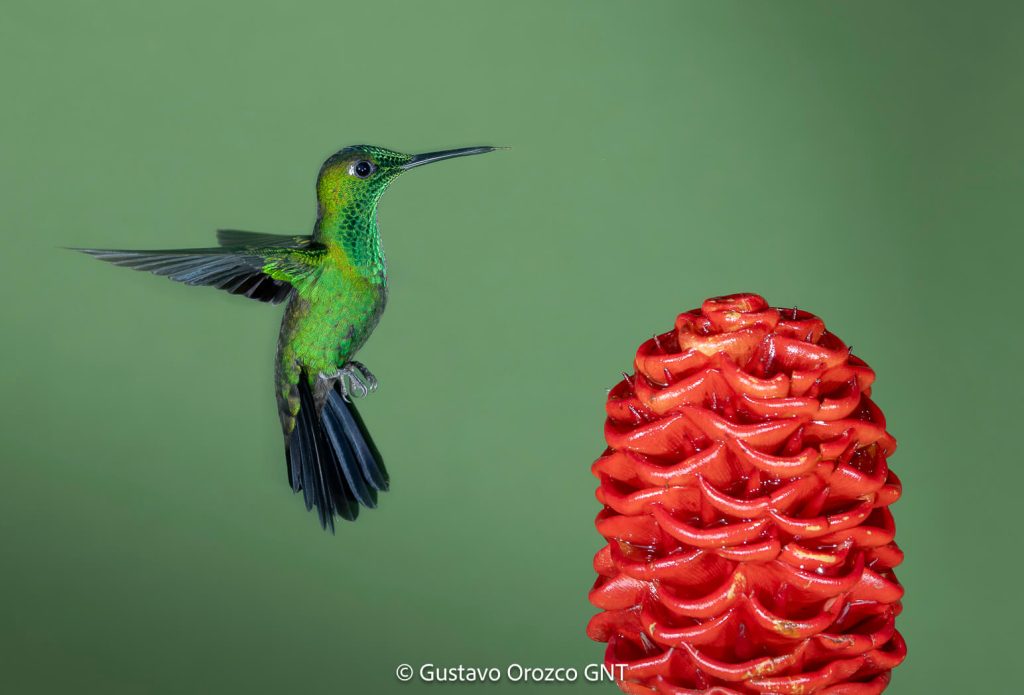
Costa Rica and Colombia are two of the most biodiverse countries on Earth. For photographers drawn to wildlife, birds, and natural ecosystems, these destinations offer extraordinary opportunities to capture behavior, movement, and habitat in authentic and meaningful ways.
Wildlife and nature photography in Costa Rica and Colombia is not simply about camera settings. It is about understanding ecosystems, anticipating behavior, and working with natural light in environments that are dynamic and constantly changing.
From the mist-covered cloud forests of Costa Rica to the Andean slopes of Colombia, successful photography requires patience, ecological awareness, and ethical field practice.
Wildlife Portraits: Capturing Character in the Field
Wildlife portraiture is more than documenting a species. It is about revealing personality, presence, and context.
Understanding Behavior Before Shooting
In both birdwatching in Costa Rica and birdwatching in Colombia, observation comes first. Studying feeding patterns, perch preferences, and movement routes allows photographers to anticipate meaningful moments rather than reacting impulsively.
Time in the field often matters more than equipment.
Composition and Eye Contact
Strong wildlife portraits rely on:
- Clean, uncluttered backgrounds
- Focus on the eyes
- Controlled depth of field
- Balanced framing
When a bird briefly turns its gaze toward the lens, the image becomes more than a record. It becomes a connection.
Working with Natural Light in Tropical Ecosystems
Natural light is one of the most powerful tools in wildlife photography.
Why Natural Light Matters
Using natural light:
- Preserves authentic feather coloration
- Reduces disturbance
- Reflects the atmosphere of the habitat
In tropical environments, light changes rapidly. Photographers must adapt continuously.
Golden Hour Advantages
Shortly after sunrise and before sunset:
- Light becomes warmer and softer
- Feather texture gains depth
- Contrast is reduced
Cloud forests in Costa Rica and high elevations in Colombia benefit particularly from diffused early morning light.
Managing Contrast in Rainforest Conditions
In dense forest:
- Avoid harsh overhead sunlight
- Position at angles that reduce strong shadows
- Use natural canopy openings to create soft backgrounds
This approach enhances realism and preserves mood.
Capturing Motion: Birds in Flight and Active Wildlife
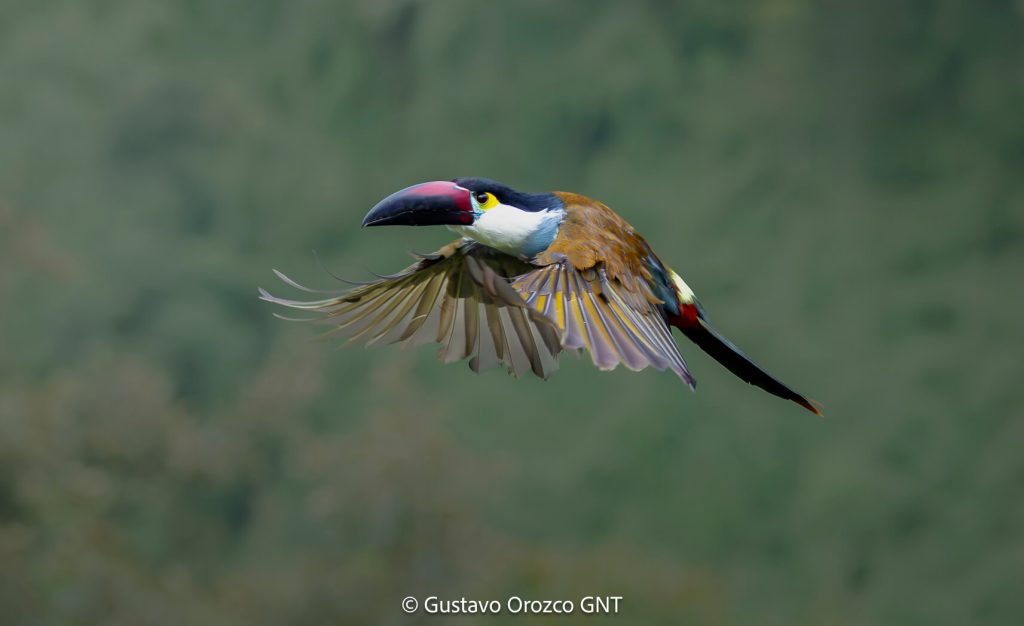
Photographing movement requires technical control and anticipation.
Recommended Techniques
- Use shutter speeds of 1/1000s or faster for birds in flight
- Activate continuous autofocus
- Use burst mode to increase capture probability
For creative motion:
- Try slower shutter speeds between 1/125 and 1/250
- Follow the subject smoothly
- Maintain steady movement
This technique works particularly well in open Andean landscapes or along forest edges.
Fill Flash in Low-Light Forest Environments
Fill flash can be useful when applied carefully.
When to Use Fill Flash
- In dense forest shade
- In strong backlighting situations
- During low early morning light
Balanced properly, fill flash enhances detail in feathers and eyes without overpowering the natural atmosphere.
Ethical practice is essential. Flash should never disturb or stress wildlife.
Composition: Elevating Documentation into Storytelling
Composition determines whether an image is technical or meaningful.
Natural Framing
Using branches or leaves to subtly frame a subject adds depth and context.
Leading Lines
Tree trunks, riverbanks, and diagonal elements guide the viewer’s eye naturally.
Rule of Thirds
Positioning birds slightly off-center creates balance and visual movement, particularly effective in wildlife and biodiversity storytelling.
Photographing Wildlife Within Habitat
Habitat shots provide ecological context.
Instead of isolating subjects entirely, wider compositions that include vegetation and landscape reveal how species interact with their environment.
This approach aligns naturally with conservation-focused travel and natural history photography.
Ethical Wildlife Observation Practices
- Maintain respectful distance
- Avoid baiting or manipulating behavior
- Follow local conservation guidelines
- Prioritize habitat preservation
Responsible photography supports long-term biodiversity protection.
Destination Insights: Costa Rica and Colombia
Costa Rica
- Compact geography with dramatic elevation changes
- Reliable opportunities for photographing quetzals and hummingbirds
- Strong conservation infrastructure
- Efficient access to diverse ecosystems
Ideal for structured nature photography tours within short travel distances.
Colombia
- Highest bird diversity in the world
- Western and Central Andes ecosystems
- Exceptional concentration of endemic species
- Expanding conservation initiatives
Colombia offers extraordinary depth for photographers seeking Andean biodiversity and species specialization.
The Role of Expert Naturalist Guides
In biodiverse ecosystems, knowledge transforms photography.
Expert naturalist guides understand:
- Seasonal movements
- Feeding behaviors
- Microhabitats
- Ethical wildlife practices
Small group nature tours provide flexibility, quieter field presence, and deeper learning opportunities. Photography becomes part of a broader natural history travel experience.
Plan Your Wildlife Photography Journey
Wildlife and nature photography in Costa Rica and Colombia requires more than technical preparation. It requires understanding, patience, and thoughtful itinerary design.
If you are considering a dedicated wildlife photography experience or organizing a small group expedition focused on birds and biodiversity, careful planning makes a significant difference.
At GeoNatura Tours, we design conservation-focused wildlife and nature photography experiences in Costa Rica and Colombia, guided by expert naturalists who combine field knowledge with ethical practice.
If you would like assistance planning your next nature photography journey, contact us directly. Share your preferred travel dates, photography goals, and target species, and we will help you design an experience aligned with your vision.
Because meaningful images begin with understanding — and understanding begins in the field.