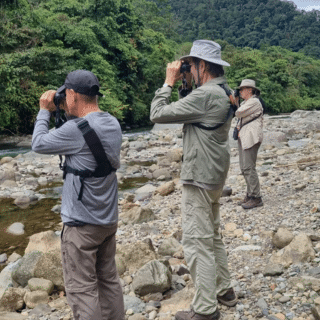
Birdwatching offers powerful mental advantages. In fact, the birdwatching brain benefits go far beyond relaxation, improving focus, perception, and cognitive function over time.
Most people think birdwatching is relaxing.
And it is.
But after spending enough time in the field, something else begins to happen.
You start noticing movement where others see nothing.
You begin to recognize sounds before you even think about them.
You anticipate where a bird might land—almost without trying.
At some point, you realize this is not just experience.
Your brain is changing.
Birdwatching Brain Benefits in Real Field Experience
There is a common misconception that birdwatching is simply about looking.
In reality, it is a constant mental exercise.
In the field, your attention is always active. You are scanning, listening, comparing, and filtering information in real time. A shape, a shadow, a brief call—everything matters.
Learning to See Beyond the Obvious
You learn to detect movement before color.
You learn to listen before you look.
You learn to focus without forcing it.
This combination—attention, memory, and pattern recognition—is what makes birding so powerful.
It is also why the benefits of birdwatching go far beyond relaxation.
What Science Says About Birdwatching Brain Benefits
Neuroscience has shown that activities requiring this kind of observation can shape the brain over time.
People who develop visual expertise—like birdwatchers—tend to process information more efficiently. They recognize patterns faster and filter distractions more effectively.
Neuroplasticity and Birdwatching
This process is known as neuroplasticity: the brain adapting through repeated experience.
You do not need to actively think about it happening.
It simply does.
Over time, your brain becomes better at interpreting what you see and hear in the natural world.
Birdwatching and Mental Health in Nature
There is another important element that often goes unnoticed.
Nature itself.
Most of our daily environment demands constant attention—screens, notifications, noise. Over time, this leads to mental fatigue.
Natural environments, however, allow the mind to recover.
The Balance Between Focus and Relaxation
Birdwatching sits in a unique space between effort and ease.
You are fully engaged, but not overwhelmed.
That balance is what makes it so effective.
It is also why birdwatching mental health benefits are increasingly recognized.
Long-Term Birdwatching Brain Benefits
The more time you spend birding, the more you begin to notice subtle changes.
Your attention becomes sharper.
Your patience increases.
Your perception becomes more precise.
Activities that involve learning, focus, and active observation are associated with what researchers call a cognitive reserve.
Building a More Resilient Mind
In simple terms, this means developing a more resilient brain over time.
Not through effort alone, but through consistent, meaningful engagement with your environment.
Bird Photography and Cognitive Benefits
When photography becomes part of the experience, the level of engagement changes again.
Now your brain must process even more information at once.
From Observation to Anticipation
You are managing:
- light
- timing
- composition
- behavior
You are no longer just observing.
You are anticipating.
This is where birding becomes more immersive—and more mentally stimulating.
What You Experience in the Field
Every birder eventually experiences this moment.
You are walking with others, and suddenly you stop.
Something moved.
No one else saw it. Not yet.
But you already know where to look.
Experience Becomes Instinct
That moment is not luck.
It is the result of time, attention, and adaptation.
Your brain has learned what matters—and how to find it.
Final Thoughts on Birdwatching Brain Benefits
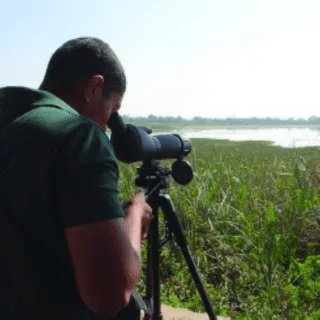
Birdwatching is not just about birds.
It is about learning how to see.
To slow down.
To focus.
To become aware of details that most people overlook.
And in the process, you are doing something quietly powerful for your mind.
Experience Birdwatching in Costa Rica
At GeoNatura Tours, our small-group birding and photography experiences are designed not only to find species, but to help you develop real field awareness, observation skills, and a deeper connection with nature.
If you are looking for more than just a trip, the difference is in how you experience it.