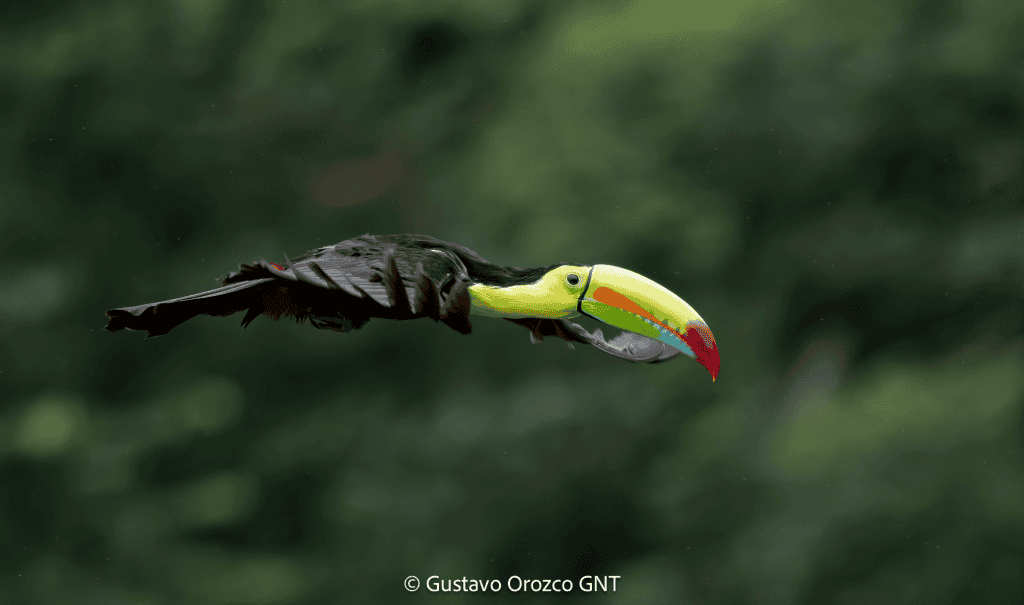
A Colorful Icon of Birdwatching in Costa Rica
Few rainforest creatures capture the imagination quite like the Keel-billed Toucan. With its rainbow-colored bill, charismatic personality, and unforgettable call echoing through the canopy, this species has become a symbol of Costa Rica birdwatching tours, eco travel, and the magic of the neotropics.
Whether you’re planning your first trip to Costa Rica or returning to deepen your connection with nature, this guide will help you understand why the Keel-billed Toucan is one of the most sought-after species on any Costa Rica wildlife tour—and how to experience it responsibly with GeoNatura Tours.
What Makes the Keel-billed Toucan So Special?
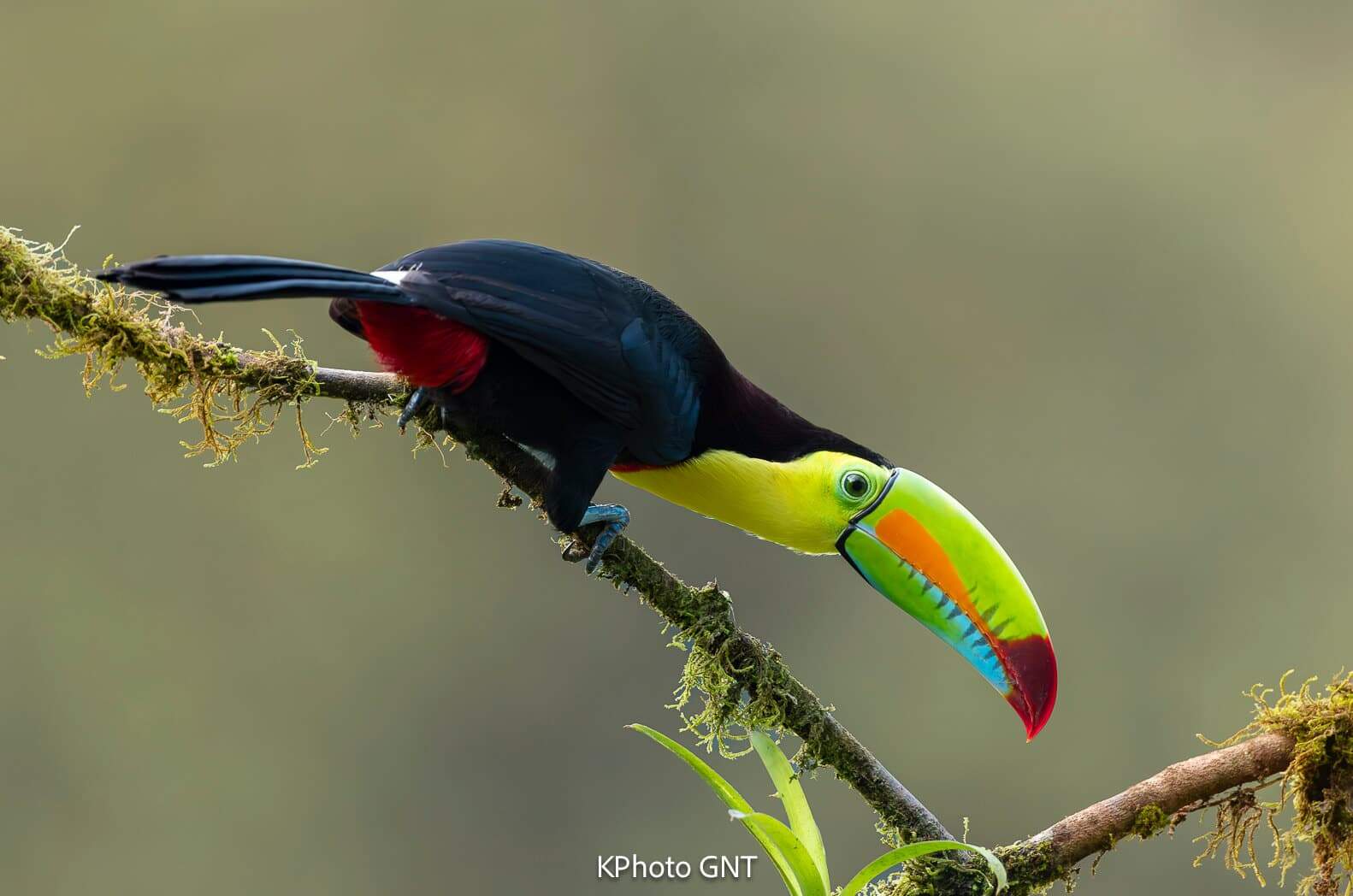
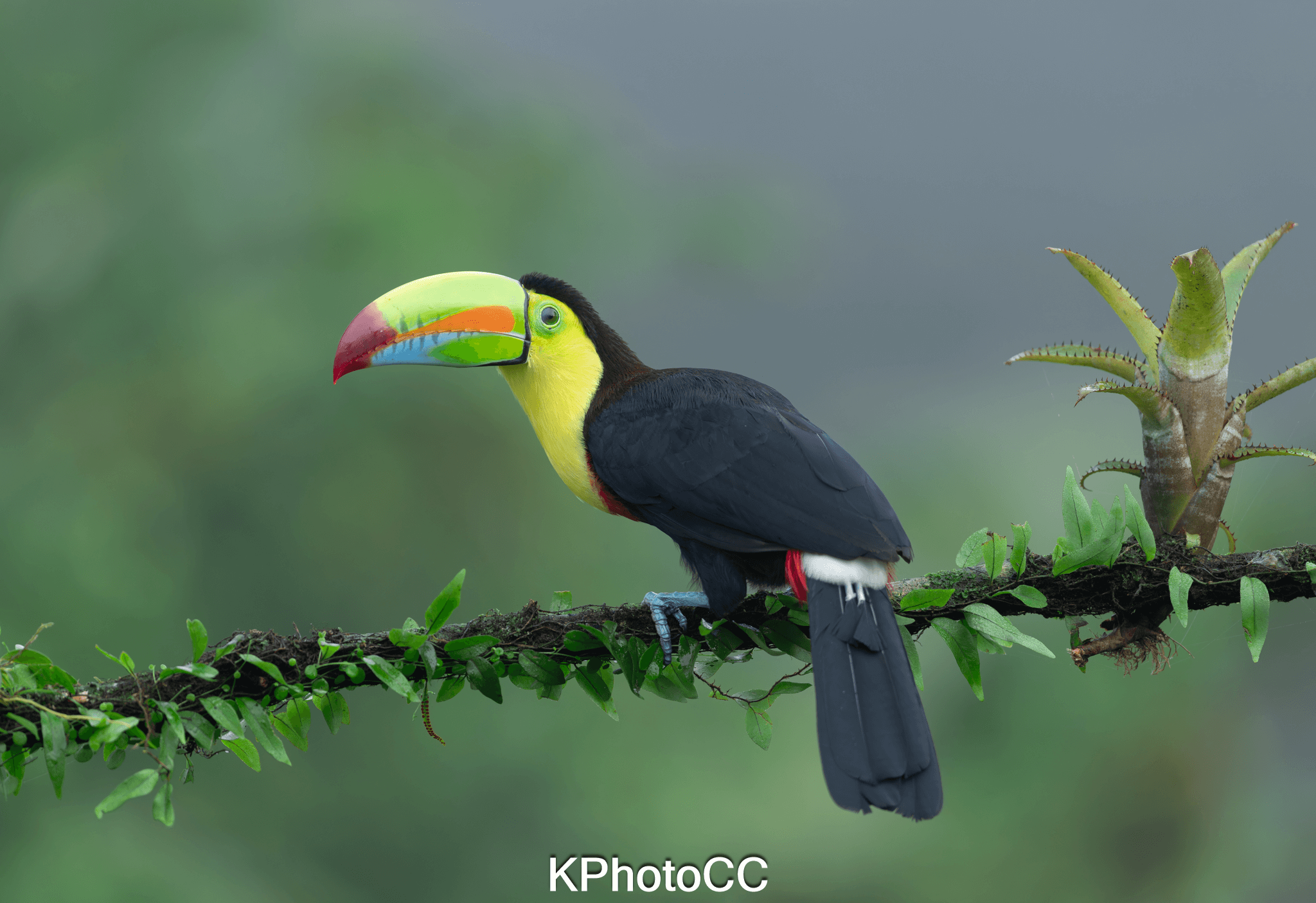
The Keel-billed Toucan (Ramphastos sulfuratus) is a masterpiece of tropical evolution. Its multicolored bill—bright green, neon orange, electric blue, and cherry red—looks almost unreal. Despite its large size, the bill is astonishingly lightweight thanks to a honeycomb-like internal structure.
Appearance & Behavior
- Vibrant bill up to 12–15 cm long
- Black plumage with a bright yellow throat patch
- Blue feet and red tail underside
- Highly social, often seen in small groups
- Known for “croaking” calls that resonate across the canopy
Their playful nature and photogenic look make them a favorite subject on Costa Rica bird photography tours.
Where to Experience the Keel-billed Toucan in Costa Rica
This toucan thrives in humid lowland and foothill rainforests on both the Caribbean and Pacific slopes.
Some of the top destinations include:
Caribbean Lowlands
- Sarapiquí – A hotspot for rainforest wildlife with exceptional toucan activity.
- Tortuguero National Park – Dense, lush jungle perfect for early-morning toucan encounters.
- La Selva Biological Station – One of the best birding locations in the country.
Northern Lowlands
- Caño Negro Wildlife Refuge – Wetlands and forests rich with toucans, kingfishers, and herons.
Central Pacific
- Carara National Park – A transition forest with high biodiversity and reliable toucan sightings.
- Tarcoles–Bijagual region – A haven for photographers.
South Caribbean
- Gandoca-Manzanillo Wildlife Refuge – Pristine forest where toucans are frequently seen among towering almendro trees.
If your goal is targeted toucan observations, the Caribbean slope offers the most consistent activity year-round.
Best Time to See the Keel-billed Toucan
Costa Rica is a top birdwatching destination in every season, but for toucans specifically:
- Best overall months: February through August
- Peak activity: March to June, when fruit is abundant
- Best time for photography: Early morning (5:20–8:00 a.m.) and late afternoon (3:30–5:30 p.m.)
Even outside peak months, toucans remain active because they do not migrate—making them a highlight of Costa Rica birdwatching vacations any time of year.
Rainforest Wildlife You Can Observe Alongside the Toucan
A Keel-billed Toucan sighting is rarely alone. On a well-planned Costa Rica nature tour, you may also observe:
- Sloths (two-toed and three-toed)
- Howler and capuchin monkeys
- Scarlet macaws
- Chestnut-mandibled Toucans (now Yellow-throated Toucan)
- Motmots and trogons
- Poison-dart frogs
- Spectacular butterflies like Blue Morphos
- Basilisks and iguanas
This biodiversity is one of the main reasons travelers choose Costa Rica eco tours over traditional vacations—every walk becomes a chance to connect deeply with the natural world.
Tips for Birdwatching in Costa Rica
1. Start early
The rainforest wakes up with the sunrise. Toucans are most active at dawn.
2. Bring the right gear
- 8×42 binoculars
- A lightweight rain jacket
- Waterproof hiking shoes
- Camera with a 300mm+ lens for bird photography
3. Move slowly and tune in
Birdwatching is about patience. Listen for croaks, rustling leaves, and canopy movement.
4. Choose a guided tour
Expert guides dramatically increase your chances of observing toucans and other target species.
5. Respect wildlife
Keep a safe distance, never feed animals, and stay on marked trails.
The Importance of Sustainable Travel in Costa Rica
The Keel-billed Toucan depends on healthy forests. Deforestation, habitat fragmentation, and climate change threaten its long-term stability across Central America.
By choosing sustainable travel in Costa Rica, you directly support:
- Protected habitats
- Local conservation initiatives
- Community-based tourism
- Wildlife monitoring programs
GeoNatura Tours integrates sustainability into every stage of the experience—from small group sizes to partnerships with local reserves.
Why Choose GeoNatura Tours?
Travelers who join GeoNatura Tours experience Costa Rica in a way that goes far beyond standard tourism.
✔ Expert Naturalist Guides
Our guides specialize in birds, rainforest ecology, and wildlife behavior, ensuring a deeper understanding of every species you encounter.
✔ Authentic, Low-Impact Experiences
We design tours that respect the forest and support conservation, avoiding overcrowded destinations.
✔ Small Groups for Better Encounters
More time, more silence, more chances for meaningful wildlife moments.
✔ Local Knowledge, Personalized Routes
Because we live here, we know where toucans feed, nest, and perch during each season.
✔ Perfect for Birders, Photographers & Nature Lovers
Whether you’re seeking lifers, breathtaking photos, or a peaceful immersion in nature, we craft tours that match your goals.
Ready to Experience the Keel-billed Toucan in Costa Rica?
Let us help you design a journey full of color, wildlife, and unforgettable rainforest moments.
Visit GeoNaturaTours.com
Contact us to plan your Costa Rica birdwatching or wildlife adventure today.